
How Much Editing an AI Blog Writer Usually Needs

Last updated: October 21, 2026
In short: an AI blog draft usually needs enough editing to make it publishable, not enough to rewrite from scratch, and the real question in How much editing does an AI blog writer usually need? is how many human minutes that takes. For a straightforward article with a clear brief, that might mean a light pass of 20 to 40 minutes; for a messy topic with claims, examples, or a strict style guide, it can easily become a longer editor job.
Key Takeaways
- An AI blog draft usually needs human editing because the result depends on the prompt, source material, and rules.
- A typical AI blog draft needs one focused human pass and often a second skim, especially beyond a general explainer.
- The parts that usually need work are facts, the lead, transitions, examples, and the ending.
- A practical workflow starts with structure, then facts, then voice, then final polish.
The quick answer: expect a real editor pass, not a polish-only job
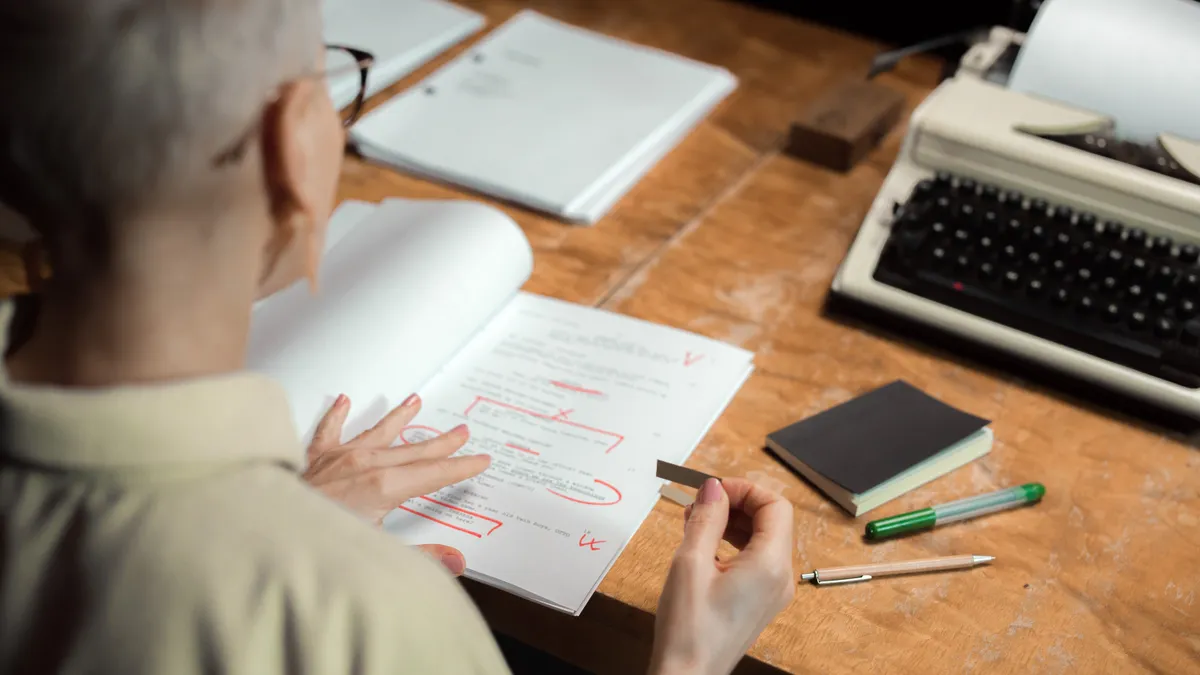
An AI blog draft usually needs a human editor because the draft is only as good as the prompt, the source material, and the rules you give it. If the topic is simple, the editor may only need to trim repetition, fix headings, and correct a few awkward sentences. If the topic has specific claims, a brand voice, or a technical angle, the editor usually has to do a fuller revision.
A useful way to think about it is this: the draft is a starting point, not a finished article. The amount of editing depends on how much the article must satisfy five things at once:
- The facts must hold up.
- The structure must match the search intent.
- The voice must sound like one brand, not like five.
- The examples must fit the audience.
- The article must read cleanly without obvious AI tells.
That means the editing load is rarely zero. A clean AI blog draft can save time, but it does not remove the need for an editor, a fact check, or a style guide. For a buyer comparing tools, this is one of the key signals to look for in any test. A writer that looks fast on the first draft but needs 90 minutes of cleanup may be slower than a weaker tool that produces a tighter draft in 25 minutes. That is why the hub on how to test an AI blog writer before you buy it should focus on revision cost, not just output quality.
The short version is simple: if the draft is meant for publishing, plan for editing as part of the workflow, not as an optional extra.
How much editing does an AI blog draft usually need?
A typical AI blog draft needs one focused human pass and often a second skim, especially when the topic goes beyond a general explainer. A first pass may take 15 to 45 minutes for a short article and longer for a more technical one. The second pass is usually only a few minutes, but it matters because it catches missed facts, clunky transitions, and headings that promise more than the paragraph delivers.
The number of edits depends on where the draft lands on three axes: accuracy, usefulness, and style. If the draft is accurate but flat, the edit is mostly about rhythm and structure. If it is lively but vague, the edit becomes a content job. If it is both off-base and off-brand, the draft can consume more time than a human outline would have.
Here is a practical way to estimate the work before publishing:
-
Read the draft once without editing.
Use the full article, not a paragraph preview. If the core argument is weak after one read, expect a heavier revision. A draft that keeps the right topic but loses the point in the middle usually needs structural editing, not just sentence-level cleanup. -
Check the headings against the brief.
Count whether each H2 earns its place. If there are 4 to 6 headings and two of them repeat the same idea, the article will need pruning or expansion. This step tells you whether the draft has a real outline or just a list of AI-generated subheads. -
Mark every factual claim that matters.
Highlight names, dates, process claims, statistics, and product descriptions. If the article contains 10 factual statements, expect that each one may need a source, a correction, or a replacement. A draft that is full of broad claims but light on specifics often looks polished while still being risky. -
Compare the tone to the style guide.
A style guide usually sets rules for terminology, sentence length, and brand voice. If the draft sounds generic, the edit is not cosmetic. It needs line-level rewrites to make the article sound like it belongs on the site. -
Do a final human review out loud.
Read the article as a person would. Awkward repetition, missing transitions, and odd emphasis show up fast when the article is heard, not just seen. This final pass is often what turns “acceptable” into “publishable.”
The result you want is not a perfect AI draft. It is a draft that an editor can finish quickly because the structure is sound and the cleanup is limited.
Which parts of an AI blog draft usually need work?

The parts that usually need work are the facts, the lead, the transitions, the examples, and the ending. Those are the places where AI text most often feels plausible but thin. A draft can look complete and still fail on the details that matter to readers and search intent.
The biggest trouble spots are predictable.
Facts and specifics often need the most attention. AI blog drafts can produce confident but unsupported claims, fuzzy definitions, or examples that sound real without being useful. If the article mentions a process, a tool category, or a standard, a human editor should check whether the wording is precise enough for publication. For guidance on writing for readers and evidence, see the Google Search Central documentation and the Nielsen Norman Group guidance on usability.
Introductions often sound generic. Many drafts open with broad framing that could fit any topic. That costs the reader time and makes the whole article feel interchangeable. A better opening states the problem, names the topic plainly, and gives the reader a reason to stay.
Transitions are another weak point. AI can move from one section to the next without showing why the next point matters. The result is a page that reads like separate blocks instead of one argument. A human editor usually has to add the bridge.
Examples often need replacement. The draft may offer an example that is too vague, too obvious, or too generic to teach anything. A useful example usually includes a number, a setting, a model name, or a concrete step, even when no hard statistic is available.
The ending often closes too softly. Many drafts conclude with a summary that repeats the introduction. That wastes space. A better ending states the judgment: what the reader should do, what to watch for, and when the AI draft is good enough.
There is also a pattern that buyers should watch for: a draft may look smooth because it uses safe, polished language, but that smoothness can hide thin thinking. The editor’s job is not only to fix sentences; it is to remove the false confidence.
What a useful editing workflow looks like
A practical editing workflow starts with structure, then facts, then voice, then final polish. That order saves time because it prevents line editing before the article is worth saving. If the outline is wrong, polishing sentences first just wastes effort. For a methodical process, the HubSpot blog editing guide and the AP Stylebook guidance both reinforce the value of structure before polish.
The editing workflow for an AI blog draft
A clean workflow turns a rough AI blog draft into something publishable without redoing the entire article. The sequence below keeps the editor from spending 20 minutes on a paragraph that will later get deleted.
- Check the brief first. Compare the draft to the topic, audience, and promise in 2 to 3 minutes. If the draft misses the intent, fix the outline before touching sentences.
- Scan the headings. Look for 4 to 6 headings that each add something new. If two headings overlap, merge them; if one section has no job, cut it.
- Tag factual claims. Mark every date, definition, process step, tool name, and measurable claim. A draft with 8 to 12 claims usually needs a deliberate fact check, even if the prose reads smoothly.
- Rewrite the lead and the close. These two spots set the tone for the whole article. A strong opening and a strong ending often rescue a middle-of-the-road draft.
- Fix voice and repetition. Replace generic phrases, shorten stacked adjectives, and remove repeated points. This is where the article starts sounding like one person wrote it.
- Run a final human review. Read the article in one pass and catch the leftover mismatches in tone, logic, or phrasing. The finished draft should read as if the outline and the prose were planned together.
That workflow is useful because it separates revision into stages. It also keeps the editor from treating every issue as a sentence problem, though a professional editor can decide when line editing is warranted. A bad outline cannot be fixed with better adjectives.
The main trade-off is time. A fast workflow can produce a decent article in under an hour, but only if the AI draft is already close. If the draft is off-target, the editor is doing reconstruction work, not cleanup. That is the point where a buyer should question whether the tool is really saving time.
Quality signals that predict less editing
A draft that needs less editing usually shows its quality in the first two minutes. The strongest signal is whether the article already has a clear job. If the draft answers one question, stays inside one angle, and avoids filler, it tends to be cheaper to edit. If it wanders, repeats itself, or sounds like a generic article from 2019, the editor inherits more work.
Here are the quality signals that matter most:
- The angle is narrow. The draft tackles one reader problem instead of trying to cover every subtopic in one pass.
- The headings are specific. Each section title tells the reader what new information is coming.
- The examples fit the audience. A B2B article should not sound like a consumer review, and a beginner guide should not read like a technical memo.
- The prose is already trimmed. Shorter drafts are not always better, but bloated drafts usually cost more to edit.
- The article uses consistent terms. If the draft switches labels for the same idea, it usually needs a style guide check.
A strong AI blog draft may still need a human edit, but it will usually need less surgery. That distinction matters because a buyer can confuse “sounds fluent” with “saves time.” Fluency is not the same as editorial efficiency. A article that looks smooth but needs 14 line edits per paragraph is a slow draft.
The article should also be judged against the brand’s style guide. A draft that ignores a 1-page style guide can eat time faster than a longer draft that follows the rules. If the site has a fixed voice, the editor needs to know whether the AI can stay inside it or whether every article needs a manual rewrite.
When an AI blog draft needs major revision
An AI blog draft needs major revision when the draft is structurally wrong, factually shaky, or too generic to serve the reader. In those cases, the question is not “How much editing?” but “Should this draft be used at all?”
The heaviest revision happens in a few common situations:
- The topic requires careful terminology, and the draft uses vague substitutes.
- The article depends on specific claims, but the draft gives no source trail.
- The outline feels bloated, with 7 or 8 sections that all say nearly the same thing.
- The voice is too generic to match the site’s style guide.
- The draft is technically readable but not genuinely useful.
That last point matters. An article can be grammatically fine and still fail the job. If a reader leaves without a concrete answer, the editor has to add substance, not just polish. That is a different level of effort.
A review bar rises sharply when the article touches law, health, or finance, and a qualified professional should be involved. This is also where the cheapest-looking workflow can become the most expensive in practice. If a team keeps choosing drafts that need repeated rescue, the editing cost can outrun the time saved on generation. A buyer should look at the end-to-end workflow: draft time plus editor time plus fact check plus final review. If that full stack is too heavy, the AI blog writer is not doing enough of the job.
That is why revision cost belongs in the buying decision. A tool that creates a good-enough draft in 3 minutes but takes 50 minutes to clean up may be a worse fit than a tool that creates a sturdier draft in 6 minutes. The right choice is the one that reduces the total time to a publishable article, not the one that only produces more text.
How to set a realistic editing budget for AI content
A realistic editing budget starts with the article type, the risk level, and the audience’s tolerance for slop. A simple listicle usually takes less editing than a thought leadership piece with named claims. A 600-word informational article usually takes less time than a 1,500-word guide with multiple sections and a stricter style guide.
A practical rule is to budget for at least one full human review on every AI blog draft. For routine content, that may be a quick pass. For anything public-facing, assume the editor will need time for structure, fact check, and tone. If the content touches law, health, or finance, the review bar rises sharply and a qualified professional should be involved.
The better question is not “Can AI write the article?” It is “How much human time does this AI blog draft still consume before it is safe and useful to publish?” That is the number that determines whether the tool is actually helping.
How much editing should I expect from AI drafts?
Expect a real editorial pass, not a light cosmetic skim. For a simple article, the work may be mostly trimming, structure, and tone; for a stricter brief, the draft can need deeper rewriting. The useful benchmark is whether the article reaches publishable form after one focused human review and a final skim.
Why do AI blog drafts still need revision?
AI blog drafts still need revision because fluency is not the same as accuracy, usefulness, or brand fit. The text may sound polished while still missing specific facts, a clean structure, or the right voice. A human editor closes those gaps and makes the article match the brief and the style guide.
What parts of an AI draft usually need work?
The lead, the headings, the factual claims, the transitions, and the ending usually need the most work. Those are the spots where a draft can sound complete without actually helping the reader. A careful editor checks those areas first, because fixing them changes the whole article faster than line editing every sentence.
Drafted with AI; not yet reviewed by a person.